

Table of Contents
- 1. Introduction
- 2. The Core Atmosphere of Vikings
- 3. Lighting in Vikings: Cold Daylight and Firelight
- 4. Environments of the Viking World
- 5. Materials and Textures: The Physical Identity of Vikings
- 6. Character Presence: Posture, Movement, Silhouette
- 7. Cinematic Prompt Examples — Viking Wardrobe and Costume Logic
- 8. Vocabulary Table for Vikings
- 9. Two Cinematic Prompt Examples Inspired by Vikings
- 10. Think Like a Cinematographer
Introduction
The visual world of Vikings is so distinctive that it almost feels like a language of its own. The cold Nordic light, the rugged landscapes, the textured costumes and the emotional weight carried by every character all contribute to a style that is instantly recognizable. When you want to create visuals inspired by this universe, the goal is not simply to describe a Viking. The goal is to recreate the atmosphere that makes the series so compelling.
A good cinematic prompt is not a list of keywords. It is a miniature piece of direction. It tells the AI how the world should feel, not just what it should contain. And Vikings offers one of the richest visual foundations you can draw from.
This article breaks down how to translate the show's aesthetic into prompts that feel cinematic, coherent and emotionally grounded.
The Core Atmosphere of Vikings
The atmosphere of Vikings is the first thing the viewer feels, long before noticing characters, costumes or action. It is a world shaped by cold air, heavy skies and landscapes that seem carved by time. The series does not treat atmosphere as background. It treats it as emotional architecture. Every scene breathes with climate, geography and mood. When you recreate this universe with AI, atmosphere is the foundation that determines whether the image feels authentic or generic.
The Viking world is defined by weight. The air is dense. The ground is wet. The sky is grey. The climate is harsh enough to influence posture, movement and even the rhythm of the story. This heaviness is not symbolic. It is physical. It shapes how characters stand, how they walk, how they speak and how they exist inside the frame. When you describe atmosphere correctly, the entire scene gains coherence.
Cold is the dominant emotional temperature. Exterior scenes rely on pale daylight that feels almost metallic. The cold is not only visual. It is tactile. It affects skin, breath and clothing. Fog often softens the horizon, creating a sense of mystery and distance. Even when the sun appears, it rarely warms the world. It simply reveals more detail in the landscape. This cold tone is essential. Without it, the universe loses its identity.
Moisture is another defining element. The world of Vikings is rarely dry. Rain, mist, wet soil and reflective water surfaces appear constantly. Moisture adds texture to clothing, armor and hair. It creates shine on leather, weight on fur and darkness on wood. It also influences movement. Characters walk differently on wet ground. They carry the environment on their bodies. When you include moisture in your prompts, the scene feels lived in rather than staged.
Wind is a subtle but important part of the atmosphere. It moves hair, fur, grass and smoke. It adds motion to otherwise static compositions. It also reinforces the sense of exposure. Characters are rarely sheltered. They exist in open landscapes where nature dominates. Wind gives the world rhythm. It prevents the scene from feeling frozen. When describing atmosphere, mentioning wind is often enough to add life to the frame.
The sky is a character of its own. It is usually heavy, overcast and layered with clouds. Even when clear, it feels pale rather than bright. The sky sets the emotional tone of the scene. A heavy sky creates tension. A fog covered sky creates introspection. A storm building in the distance creates anticipation. The sky is not decoration. It is mood.
Smoke is a recurring atmospheric element. It rises from longhouses, torches, fires and rituals. Smoke adds depth to interiors and movement to exteriors. It interacts with light, creating soft gradients and diffused shadows. It also reinforces the tactile identity of the world. Smoke makes the air feel thick and lived in. When used in prompts, it adds cinematic weight.
The landscape itself contributes to atmosphere. Fjords, forests, rocky coastlines and open fields all carry emotional meaning. Fjords feel solemn and ancient. Forests feel enclosed and mysterious. Coastlines feel harsh and exposed. Open fields feel vulnerable. The landscape is not neutral. It shapes the emotional temperature of the scene. When you choose the right environment, the atmosphere becomes coherent.
Atmosphere in Vikings is not created through color saturation or stylized effects. It is created through natural elements that repeat across the series. Cold air. Wet ground. Heavy sky. Fog. Wind. Smoke. These elements form a visual language. When you use them intentionally, your prompts stop feeling like generic medieval scenes and start feeling like the world of Vikings.
To recreate this atmosphere with AI, think in terms of physical sensation rather than visual decoration. Describe the cold. Describe the moisture. Describe the weight of the sky. Describe the movement of wind. Describe the density of the air. These details anchor the scene in the universe. They tell the model how the world should feel, not just what it should contain.
Atmosphere is the soul of Vikings. When you capture it, everything else falls into place.
Lighting in Vikings: Cold Daylight and Firelight
Lighting is one of the strongest visual signatures in Vikings. It shapes emotion, defines atmosphere and anchors the world in a specific cultural and geographic reality. The series relies on a deliberate contrast between cold exterior daylight and warm interior firelight. This contrast is not stylistic decoration. It is the backbone of the show's visual identity. When you recreate the universe with AI, lighting is one of the first elements you must define.
Cold daylight is the dominant exterior lighting style. It is pale, desaturated and often softened by fog or cloud cover. The sun rarely appears as a warm source. Instead, it behaves like a diffused northern light that reveals detail without adding warmth. This cold daylight creates a sense of exposure and vulnerability. Characters stand against landscapes that feel ancient and indifferent. The light is honest. It shows every texture, every flaw, every mark of weather and time. When describing exterior lighting in prompts, think in terms of grey daylight, pale sky, diffused sun and soft shadows.
Fog plays a major role in shaping exterior light. It reduces contrast, softens edges and adds depth to the frame. Fog also creates emotional distance. It makes the world feel larger and more mysterious. In Vikings, fog is not used for fantasy. It is used for realism. It reflects the climate of northern regions and reinforces the cold tone of the universe. When you include fog in your prompts, you add both atmosphere and authenticity.
Firelight is the heart of interior lighting. Longhouses, cabins and ritual spaces rely almost entirely on flames. Firelight creates warmth, intimacy and emotional depth. It also creates contrast. The warm glow of firelight stands against the cold daylight outside, reinforcing the duality of the Viking world. Firelight is not clean or modern. It flickers, shifts and casts uneven shadows. It interacts with smoke, wood and fur, creating a layered and tactile atmosphere.
Smoke is essential to interior lighting. It softens firelight, diffuses highlights and adds movement to the frame. Smoke also creates vertical gradients that make interiors feel deeper and more immersive. In ritual scenes, smoke becomes part of the emotional tone. It adds mystery and weight. When describing interior lighting, mentioning smoke rising toward the ceiling or drifting through the room adds cinematic realism.
Shadows are used with intention. In Vikings, shadows are not simply the absence of light. They are part of the storytelling. Deep shadows create tension. Soft shadows create intimacy. Shadows on faces reveal emotional conflict. Shadows in corners create uncertainty. When writing prompts, think about how shadows shape the mood rather than simply describing them as dark areas.
Metal and reflective surfaces behave differently in Viking lighting. Iron and steel catch firelight in sharp highlights. Wet leather reflects cold daylight with subtle shine. Water surfaces mirror the sky with pale reflections. These interactions between light and material add realism and texture. When describing lighting, consider how it touches armor, weapons, wood and fur.
Interior lighting also reveals hierarchy and emotion. Leaders often stand near fire sources, giving them stronger highlights and more visual presence. Warriors in conflict may stand partially in shadow, creating tension. Ritual scenes often use low light to create mystery. When writing prompts, think about how lighting supports the emotional purpose of the scene.
The contrast between cold daylight and warm firelight is the essence of Viking lighting. It creates a world that feels harsh yet intimate, exposed yet grounded, ancient yet alive. When you recreate this universe with AI, defining this contrast is essential. Without it, the scene loses its identity and becomes generic medieval imagery.
To write lighting effectively in prompts, think in terms of temperature, diffusion, contrast and interaction with materials. Describe the cold. Describe the warmth. Describe the fog. Describe the smoke. Describe how light moves through the world. Lighting is not just illumination. It is emotion, culture and atmosphere.
When you capture the lighting of Vikings, you capture the soul of the series.
Environments of the Viking World
The environments in Vikings are not generic medieval backdrops. They are culturally specific, climate driven and emotionally charged spaces that define how the world feels and how characters exist within it. Every location in the series carries weight. It shapes posture, movement, lighting and atmosphere. When you recreate this universe with AI, choosing the right environment is one of the most important decisions you make. The environment determines the emotional temperature of the scene.
The Viking world is built from landscapes that feel ancient and unforgiving. Fjords, forests, rocky coastlines and open fields dominate the geography. These spaces are not neutral. They communicate mood before any character appears. A fjord feels solemn. A forest feels enclosed. A coastline feels harsh. An open field feels vulnerable. When you describe environments with intention, your prompts gain coherence and cinematic depth.
Fjords are one of the strongest visual anchors of the series. They combine cold reflective water, steep cliffs and heavy sky. Fjords create a sense of scale and isolation. They make characters appear small against nature. Fog often rolls across the water, softening the horizon and adding mystery. When you choose a fjord as the environment, the scene becomes introspective and solemn. It carries emotional gravity.
Forests in Vikings are dense, wet and filled with diffused daylight. The ground is soft with moss and mud. Trees create vertical lines that shape composition. Forests often serve as spaces for travel, conflict or introspection. They feel enclosed and unpredictable. Fog moves between the trees, creating depth and tension. When describing forest environments, focus on moisture, texture and soft light.
Coastal villages are built from wood, earth and simple structures. They feel lived in and functional rather than decorative. Houses are small, roofs are steep and materials show wear from wind and salt. Smoke rises from chimneys. Boats rest near the shore. Coastal villages create a sense of community and survival. They are environments shaped by climate and necessity. When writing prompts, describe the textures of wood, the presence of smoke and the cold air coming from the sea.
Longhouses are the heart of Viking interior environments. They are warm, smoky and filled with firelight. Wooden beams, carved details, fur coverings and iron accents define the space. Longhouses feel intimate and heavy. They are places of ritual, conflict, planning and celebration. Smoke rises toward the ceiling, interacting with firelight and creating layered shadows. When describing longhouses, focus on warmth, texture and the movement of smoke.
Ships are essential to the Viking identity. They are not just vehicles. They are symbols of exploration, danger and ambition. Viking ships cut through cold northern seas with rhythmic motion. Water reflects pale daylight. Wind moves through sails and hair. The environment is constantly shifting. Ships create dynamic scenes with natural movement and exposure. When writing prompts, describe the sea, the wind and the motion of the vessel.
Open fields appear frequently in the series, often during travel or battle. These fields are not bright or idyllic. They are cold, wet and shaped by uneven terrain. Grass moves with wind. Mud clings to boots. The sky feels heavy. Open fields create vulnerability. Characters appear exposed and small. When describing open fields, focus on climate, movement and the weight of the sky.
Ritual spaces are some of the most atmospheric environments in Vikings. They are often located in forests or near water. Carved wooden symbols, stones, fire sources and natural elements define these spaces. Ritual environments feel heavy, spiritual and mysterious. Smoke, shadows and firelight shape the mood. When writing prompts, describe symbolic objects, carved wood and the emotional weight of the scene.
Battlefields in Vikings are chaotic, wet and grounded in realism. Mud, rain, uneven terrain and heavy movement define these environments. The landscape becomes part of the conflict. Characters slip, push and struggle against the ground. Battlefields are not clean or stylized. They are physical and brutal. When describing battle environments, focus on texture, moisture and movement.
Every environment in Vikings carries emotional meaning. The world is not a backdrop. It is a character. It shapes how scenes breathe and how characters exist. When you choose the right environment in your prompts, you anchor the entire scene in the universe. You create coherence, weight and authenticity.
To recreate the Viking world with AI, think in terms of climate, geography and texture. Describe the cold. Describe the moisture. Describe the wood, the stone and the water. Describe how the environment interacts with light and movement. When you capture the environment correctly, the entire scene becomes true to the spirit of Vikings.
Materials and Textures: The Physical Identity of Vikings
The physical world of Vikings is defined by what things are made of and how they age. Materials and textures are not decorative elements. They are the backbone of the universe. They tell you the era, the climate, the culture and the emotional weight of the world. When you recreate Vikings with AI, materials and textures determine whether the scene feels authentic or artificial. If the materials are wrong, the universe collapses instantly.
The Viking world is built from natural, heavy and imperfect materials. Wood, leather, fur, iron, wool and stone dominate every environment. These materials carry history. They show wear. They react to climate. They absorb light. They define the tactile identity of the universe. When you describe materials with intention, your prompts gain realism and weight.
Wood is one of the most important materials in Vikings. It appears in longhouses, shields, boats, tools and ritual objects. Viking wood is never polished or modern. It is aged, rough and marked by weather. Grain is visible. Edges are uneven. Surfaces show scratches, dents and darkened areas from smoke. Wood absorbs firelight and reflects cold daylight with subtle matte tones. When describing wood, think in terms of rough texture, carved details and visible wear.
Leather is another defining material. Viking leather is thick, worn and often wet. It appears in armor, belts, boots, bags and clothing. Leather reacts strongly to climate. Rain darkens it. Fog softens it. Cold air makes it stiff. Firelight creates warm highlights on its surface. Leather in Vikings is never clean or modern. It is functional and weathered. When describing leather, focus on cracks, moisture, uneven color and heavy texture.
Fur adds weight and warmth to the world. Fur cloaks, collars and coverings appear frequently, especially in cold environments. Viking fur is heavy, coarse and shaped by use. It reacts to wind, movement and moisture. Fur catches firelight in soft highlights and creates deep shadows in folds. It adds volume to silhouettes and reinforces the harsh climate. When describing fur, think in terms of thickness, uneven strands and natural variation.
Iron and steel define weapons, tools and armor. Viking metal is practical rather than decorative. It shows scratches, dents and signs of forging. It reflects firelight sharply and cold daylight softly. Metal in Vikings is heavy and imperfect. It feels handmade rather than industrial. When describing metal, focus on rough edges, visible hammer marks and subtle reflections.
Wool is the foundation of Viking clothing. Tunics, cloaks and underlayers are made from thick wool that absorbs moisture and carries texture. Wool in Vikings is coarse, uneven and naturally colored. It reacts to movement and light in subtle ways. It adds realism to clothing and reinforces the handmade identity of the world. When describing wool, think in terms of rough weave, muted tones and visible fibers.
Stone appears in ritual spaces, landscapes and certain structures. Viking stone is heavy, cracked and shaped by time. It carries moss, moisture and uneven surfaces. Stone interacts with cold daylight in a way that creates depth and weight. When describing stone, focus on irregular texture, weather marks and natural variation.
Moisture is one of the most important texture elements in Vikings. Rain, fog, wet soil and reflective water surfaces appear constantly. Moisture changes how materials behave. It darkens leather, softens wool, adds shine to wood and creates reflections on metal. Moisture also adds realism. It makes the world feel lived in rather than staged. When describing textures, include moisture whenever appropriate.
Wear is essential. Nothing in Vikings looks new. Everything carries marks of use, climate and time. Scratches, dents, frayed edges, chipped surfaces and faded tones appear everywhere. Wear tells the story of the world. It shows that characters live in a harsh environment where objects are used, repaired and reused. When describing textures, focus on wear as a visual narrative.
Surfaces in Vikings are almost always matte or semi matte. Glossy surfaces do not belong to this universe. Matte surfaces create realism and weight. They absorb light rather than reflect it. They make the world feel grounded. When describing surfaces, avoid modern shine and focus on natural texture.
Materials and textures also interact with lighting. Firelight creates warm highlights on wood, leather and fur. Cold daylight reveals grain, cracks and imperfections. Fog softens edges and adds depth. Smoke diffuses light and creates gradients on surfaces. When writing prompts, think about how materials behave under different lighting conditions.
The physical identity of Vikings comes from the tactile realism of its materials. When you describe wood, leather, fur, iron, wool and stone with intention, your prompts gain authenticity. When you include moisture, wear and matte surfaces, your scenes feel grounded. When you think about how materials interact with light, your images become cinematic.
When guiding the model toward a true Norse atmosphere, focus on texture before detail. Describe how things feel, not just what they are. The world of Vikings is built from weight, wear and weather. When you capture these elements, the universe becomes real.
Character Presence: Posture, Movement, Silhouette
The characters in Vikings communicate more through their bodies than through words. Presence is a form of storytelling. It defines who they are, what they carry and how they exist inside the world. When crafting Viking themed AI prompts, posture, movement, silhouette and facial hair are essential tools for achieving authenticity and cinematic weight.
Posture in Vikings is heavy, grounded and shaped by climate and conflict. Characters rarely stand casually. Their stance reflects responsibility, tension or emotional burden. Warriors hold strength in their shoulders. Leaders stand with controlled stillness. Shieldmaidens carry balance and readiness. Even moments of calm feel deliberate. Posture is intention made visible.
Movement is slow, deliberate and influenced by environment. The Viking world is wet, cold and uneven, so characters move with caution and purpose. They walk through forests with measured steps. They cross open fields with awareness. They enter longhouses with ritualistic rhythm. Movement is never nervous or rushed unless the scene demands urgency. When building Viking inspired scenes through AI, describing movement adds life and prevents the model from generating generic medieval poses.
Characters in Vikings rarely stand still without intention. Every gesture belongs to a moment shaped by conflict, ritual or emotional pressure. A Viking is never idle. They exist inside the frame with purpose, whether facing a decision, preparing for violence, enduring doubt or holding back fury. This physical storytelling is one of the strongest visual signatures of the series.
Silhouette is one of the most recognizable elements of Viking presence. Fur cloaks add volume. Leather armor creates structure. Wool tunics add weight. Braided hair frames the head. Weapons hang visibly at the side. These layers create a silhouette that feels ancient, functional and unmistakably Norse. When translating the Viking aesthetic into AI generated imagery, silhouette becomes a powerful anchor for coherence.
Facial hair is a defining part of Viking silhouette. Beards are not decorative. They are cultural identity, age, status and experience made visible. Viking beards are thick, rugged and shaped by climate. They carry moisture, frost, smoke and wear. Some are long and braided. Others are short and heavy. Leaders often have controlled, symbolic beard shapes. Warriors show rougher, weathered growth. Facial hair interacts with light, movement and emotion, adding depth to the character's presence. When designing prompts that capture the spirit of the Viking world, beard description is essential for authenticity.
Hair also contributes to silhouette. Braids, loose strands, shaved sides and warrior knots define identity. Hair reacts to wind, movement and moisture, adding rhythm and texture to the scene. Together, hair and beard create a facial silhouette that feels unmistakably Viking.
Wardrobe reinforces presence. Leather, fur, wool and iron create a tactile outline that interacts with light and movement. Clothing is worn, weathered and shaped by climate. It adds weight to the silhouette and helps the AI understand the era. When guiding the model toward a true Norse atmosphere, wardrobe should be described as part of the character's physical identity rather than a list of items.
Weapons influence posture and silhouette. A sword at the hip changes stance. A shield on the back changes balance. An axe in hand changes movement. Weapons are not accessories. They shape how characters exist in the frame. When shaping AI visuals rooted in early medieval Scandinavia, include how weapons affect posture and presence.
Emotion is expressed physically. Doubt appears in shoulders. Rage appears in jaw tension. Resolve appears in stance. Fear appears in breath and posture. Vikings communicates emotion through body language more than facial expression. When aiming for authenticity in Viking inspired AI artwork, describing emotional posture creates cinematic depth.
When describing action in prompts, focus on intention:
- a warrior preparing for battle,
- a shieldmaiden reflecting before a ritual,
- a leader confronting an impossible choice,
- a fighter caught between rage and restraint.
These emotional states transform a static figure into a living part of the world. Narrative weight comes from physical intention. When your prompts capture that intention, the AI understands the scene not as a pose but as a moment inside the Viking universe.
Character presence is not about posing. It is about physical storytelling. When directing AI to follow the visual logic of the Vikings universe, think in terms of weight, rhythm, silhouette, beard texture and emotional pressure. These elements transform a figure into a believable inhabitant of early medieval Scandinavia.
A Viking scene becomes authentic when the character feels shaped by climate, culture and conflict. Presence is the bridge between the world and the person. When you capture posture, movement, silhouette and facial hair with precision, the entire scene becomes true to the spirit of Vikings.
Cinematic Prompt Examples:
Cinematic Viking prompts work best when they combine atmosphere, lighting, environment, materials, posture, silhouette and emotional intention. The examples below follow the visual logic of the series and are structured to help the model understand the world with clarity and weight. Each prompt is built to reinforce the Viking aesthetic while remaining flexible for your AI workflow.
1. Warrior Preparing for Battle — Cold Coastline
Cinematic portrait of a Viking warrior standing on a rocky coastline under cold pale daylight, heavy sky with diffused clouds, wind moving through fur cloak and braided hair, thick beard carrying moisture, worn leather armor with visible cracks, iron axe held with grounded posture, wet stones reflecting grey light, atmosphere tense and solemn, early medieval Scandinavian realism, textured and immersive scene.
2. Shieldmaiden Before a Ritual — Longhouse Interior
Firelit interior of a wooden Viking longhouse, warm glow reflecting on carved beams and smoke drifting toward the ceiling, shieldmaiden standing with deliberate posture, braided hair framing the face, wool tunic layered under weathered leather, fur accents catching soft highlights, expression focused and introspective, ritual objects arranged on a rough wooden table, atmosphere intimate and heavy, cinematic Norse composition.
3. Leader Confronting an Impossible Choice — Forest Clearing
Wide shot of a Viking leader standing alone in a mist covered forest clearing, cold daylight filtered through tall trees, beard marked by frost and tension, fur cloak weighed down by moisture, leather armor worn and darkened, posture controlled but burdened, ground wet with moss and mud, fog creating depth between tree trunks, emotional tone quiet and conflicted, early medieval Scandinavian authenticity.
4. Fighter Caught Between Rage and Restraint — Fjord Edge
Cinematic close shot at the edge of a fjord, cold reflective water behind the character, wind pushing through hair and beard, jaw tense, eyes focused, shoulders heavy with emotional pressure, leather straps soaked and darkened, iron weapon held with restrained force, fog rolling across the water, atmosphere charged and dramatic, Viking world realism with tactile textures.
5. Ritual Vision — Smoke and Symbolic Objects
Dim ritual space lit only by fire sources, smoke drifting in slow vertical motion, carved wooden symbols arranged around a mysterious figure with pale skin and deep eyes, beard braided with small iron rings, movement slow and deliberate, fur cloak absorbing warm highlights, shadows creating layered depth, atmosphere surreal and spiritual, cinematic Norse mysticism.
6. Battle Scene — Open Field Under Heavy Sky
Wide battlefield scene on a wet open field, cold daylight under a heavy overcast sky, mud clinging to boots and armor, warriors moving with weight and caution, fur cloaks soaked, iron weapons reflecting pale light, silhouettes layered and rugged, wind pushing through grass, atmosphere chaotic but grounded, early medieval Scandinavian realism with tactile textures.
7. Viking Ship Under Fog — Northern Sea
Cinematic shot of a wooden Viking ship cutting through a fog covered northern sea, cold grey light diffused across water, wet wood reflecting subtle highlights, warriors standing with deliberate posture, beards carrying moisture, fur and wool layers moving with wind, iron shields arranged along the hull, atmosphere solemn and expansive, Norse maritime authenticity.
8. Introspective Moment — Inside a Quiet Longhouse
Quiet interior scene inside a longhouse, firelight creating warm gradients on wood and fur, smoke drifting slowly, a Viking sitting with heavy posture, beard resting on chest, hands clasped around a worn iron object, wool tunic textured and muted, emotional tone reflective and grounded, cinematic Norse intimacy.
9. Storm Approaching — Cliffside Vigil
Viking warrior standing on a cliff overlooking a fjord, storm clouds gathering in the distance, cold wind moving through hair and beard, fur cloak lifting with motion, leather armor darkened by moisture, posture tense and vigilant, reflective water catching pale light, atmosphere dramatic and foreboding, early medieval Scandinavian worldbuilding.
10. The Veteran — Weight of Experience
Cinematic portrait of an older Viking with a long weathered beard, braided strands carrying signs of age, deep lines on the face, fur cloak heavy and worn, leather armor cracked and darkened, cold daylight revealing texture and history, posture grounded and slow, emotional tone solemn and experienced, Viking world authenticity with tactile realism.
Cinematic Prompt Examples — Viking Wardrobe and Costume Logic
1. Warrior in Worn Leather and Fur
Cinematic portrait of a Viking warrior wearing cracked leather armor layered over a thick wool tunic, heavy fur cloak reacting to cold wind, muted earth tones darkened by moisture, iron axe with visible forging marks, braided beard carrying frost, early medieval Scandinavian realism with tactile textures.
2. Shieldmaiden in Wool and Iron
Firelit interior of a longhouse, shieldmaiden standing with deliberate posture, wool tunic layered under weathered leather, fur collar catching warm highlights, iron armbands showing scratches, braided hair framing the face, smoke drifting upward, atmosphere intimate and grounded in Norse authenticity.
3. Leader with Symbolic Fur Cloak
Wide shot of a Viking leader on a cliffside, heavy fur cloak lifting with wind, wool underlayers muted and worn, iron brooches forged by hand, beard marked by age and smoke, cold daylight revealing texture and weight, early medieval Scandinavian worldbuilding.
4. Veteran with Weathered Clothing
Cinematic close shot of an older Viking with a long rugged beard, wool tunic faded and frayed, leather straps cracked from years of use, fur cloak heavy and uneven, iron weapon showing dents, emotional tone solemn and experienced, Viking wardrobe authenticity.
5. Ritual Attire in a Sacred Clearing
Viking figure standing in a fog covered forest clearing, wool cloak marked by moisture, fur accents catching diffused daylight, iron rings braided into beard, carved wooden symbols arranged around the scene, atmosphere spiritual and tactile, Norse ritual realism.
6. Battle Ready Clothing Under Heavy Sky
Wide battlefield scene, warriors wearing layered wool and leather darkened by rain, fur cloaks soaked and heavy, iron shields reflecting pale light, muted colors blending with wet ground, silhouettes rugged and functional, cinematic Viking combat authenticity.
7. Sailor on a Viking Ship
Viking sailor standing on a wooden ship under fog, wool tunic textured and damp, leather belt worn and uneven, fur shoulder covering reacting to wind, iron tools hanging at the side, beard carrying moisture, atmosphere cold and maritime, Norse seafaring realism.
Vocabulary Table for Vikings
A strong cinematic prompt depends on precise vocabulary. Vikings has a distinct visual language built from atmosphere, lighting, environment, materials, movement and emotional weight. When crafting Viking themed AI prompts, choosing the right words is as important as choosing the right elements. The table below organizes the core vocabulary of the Viking world into categories that reflect the series' aesthetic and help the model understand the universe with clarity.
This vocabulary is not meant to be memorized. It is meant to be used as a toolkit. Each term reinforces the tactile, atmospheric and cultural identity of early medieval Scandinavia. When designing prompts that capture the Viking world, combining words from these categories creates coherence and cinematic depth.
Atmosphere
| Concept | Vocabulary |
|---|---|
| Cold tone | cold air, pale daylight, heavy sky, metallic light, frost, chill |
| Moisture | wet soil, mist, fog, moisture, rain soaked, damp air |
| Weight | dense atmosphere, solemn tone, heavy silence, grounded mood |
| Movement | drifting fog, rolling mist, slow wind, thick air |
Lighting
| Concept | Vocabulary |
|---|---|
| Exterior | cold daylight, diffused sun, overcast sky, pale reflections |
| Interior | firelight, warm glow, flickering flames, ember light |
| Interaction | smoke softened light, fog diffusion, matte highlights |
| Shadows | deep shadows, layered shadows, soft gradients |
Environments
| Concept | Vocabulary |
|---|---|
| Landscapes | fjord, rocky coastline, dense forest, open field, northern sea |
| Interiors | longhouse, wooden hall, ritual chamber, smoke filled room |
| Climate | cold wind, heavy clouds, wet ground, frost covered terrain |
| Ritual spaces | carved symbols, sacred clearing, stone circle |
Materials
| Concept | Vocabulary |
|---|---|
| Natural | wool, leather, fur, iron, wood, stone |
| Texture | cracked leather, coarse fur, rough wood, forged iron |
| Wear | weathered, aged, worn, frayed, moisture stained |
| Surface | matte texture, uneven grain, hand forged detail |
Movement
| Concept | Vocabulary |
|---|---|
| Pace | slow steps, deliberate motion, grounded movement |
| Environment reaction | wind pushing through cloak, hair shifting, fur lifting |
| Combat | heavy swing, controlled stance, measured advance |
| Emotional | tense posture, restrained motion, burdened walk |
Presence
| Concept | Vocabulary |
|---|---|
| Silhouette | layered silhouette, fur volume, braided hair, heavy cloak |
| Facial hair | rugged beard, braided beard, frost marked beard |
| Posture | grounded stance, controlled stillness, heavy shoulders |
| Emotion | conflicted presence, solemn focus, restrained fury |
Era Accuracy
| Concept | Vocabulary |
|---|---|
| Historical | early medieval Scandinavia, Norse culture, handmade materials |
| Tools | iron axe, wooden shield, forged blade, simple tools |
| Clothing | natural dyes, wool tunic, leather armor, fur cloak |
| Avoid | synthetic fabric, polished metal, bright colors, modern objects |
The table is designed to help users build prompts that feel coherent and cinematic. Combining terms across categories creates depth:
- atmosphere + lighting
- environment + materials
- posture + emotion
- silhouette + movement
This structure guides the model toward a true Norse aesthetic and prevents modern or fantasy inconsistencies.
Cinematic Prompt Examples Using the Vocabulary
Below are short examples showing how the vocabulary works in practice.
1. Atmosphere + Presence
Viking warrior standing under pale daylight with heavy sky, braided beard marked by frost, fur cloak lifting with cold wind, grounded stance and solemn presence.
2. Environment + Materials
Shieldmaiden inside a smoke filled longhouse, wool tunic layered under cracked leather, firelight creating warm gradients on coarse fur, carved wooden beams surrounding the scene.
3. Movement + Emotion
Leader walking through a mist covered forest with slow deliberate steps, heavy shoulders carrying tension, braided hair shifting with wind, atmosphere dense and introspective.
4. Era Accuracy + Silhouette
Viking figure wearing wool tunic, weathered leather armor and heavy fur cloak, iron axe forged by hand, muted earth tones, layered silhouette shaped by early medieval Scandinavian realism.
5. Lighting + Ritual Space
Ritual scene lit by flickering firelight, smoke drifting upward, carved symbols arranged around a Viking with braided beard and controlled stillness, atmosphere spiritual and tactile.
Two Cinematic Prompt Examples Inspired by Vikings
These examples follow the principles above and are designed to produce visuals that feel coherent with the aesthetic of the series.
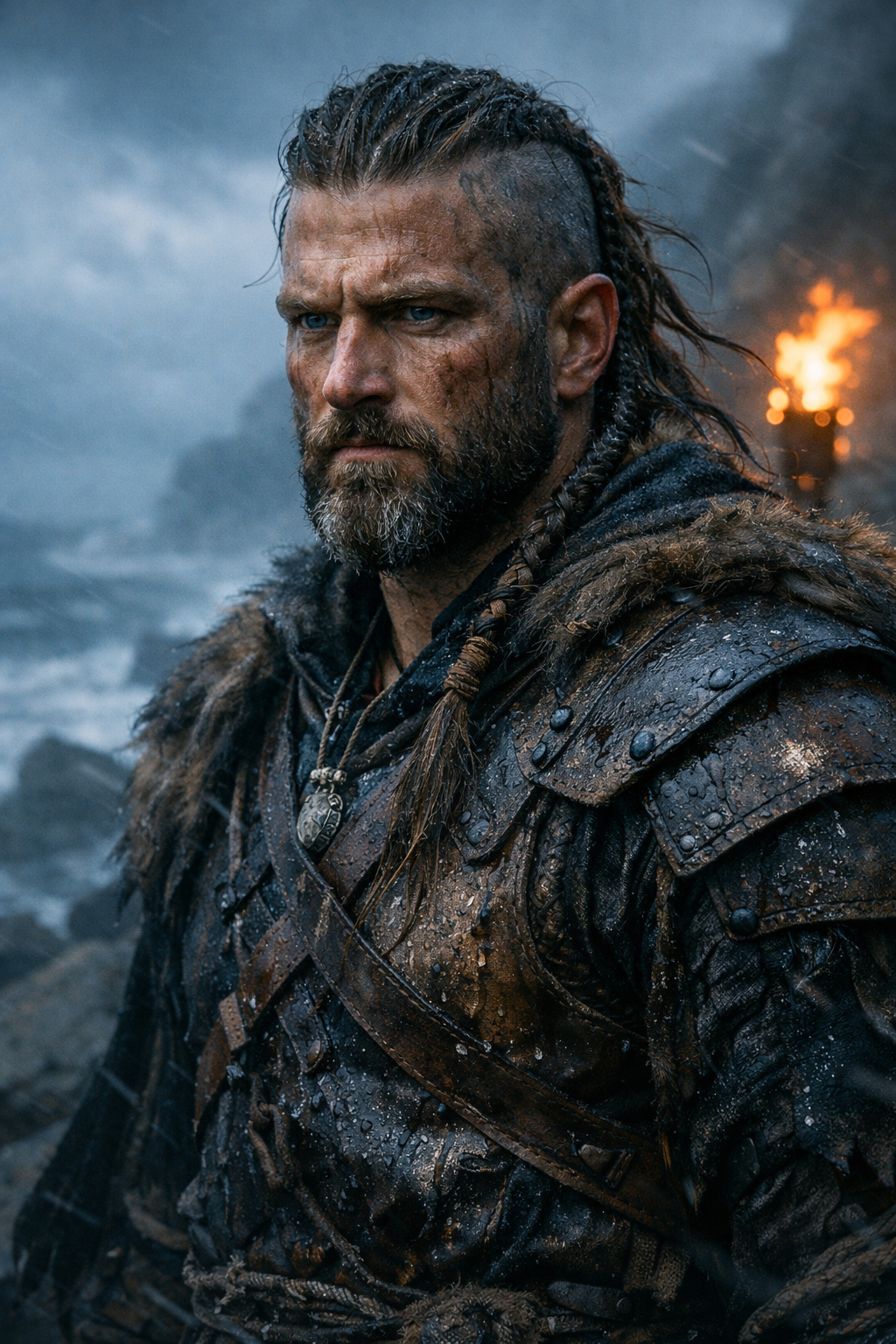
Example 1: The Storm-Lit Warrior
Cinematic portrait of a Viking warrior standing on a rocky coastline during a storm, cold blue daylight mixed with warm firelight from a distant torch, wet leather armor, braided hair, rough textures on clothing, wind pushing through the scene, tense expression, atmospheric fog, grounded and realistic mood, clean composition, high detail.
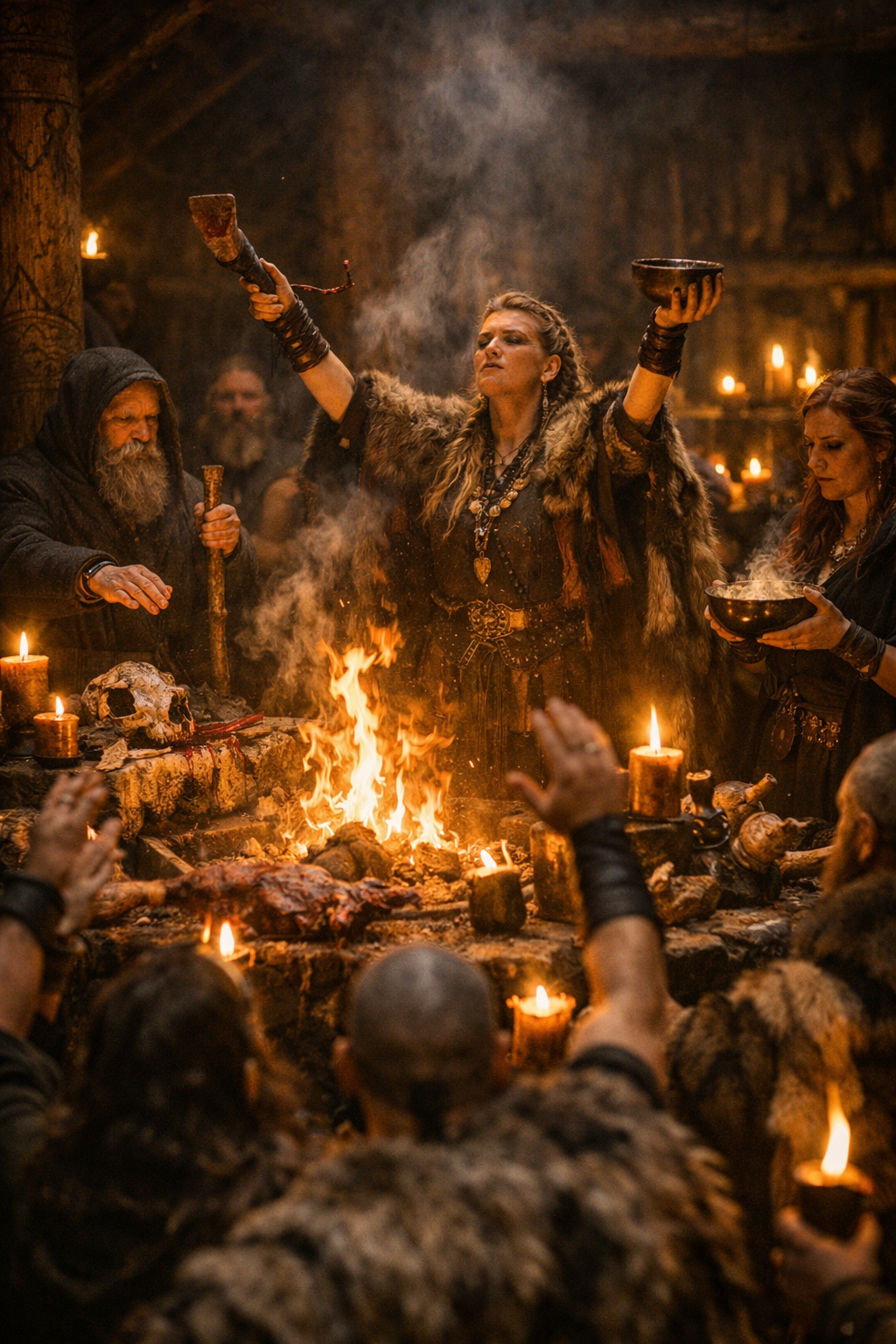
Example 2: The Ritual in the Longhouse
Interior scene inside a wooden Viking longhouse lit only by firelight, warm glow reflecting on carved wooden beams, smoke rising toward the ceiling, a shieldmaiden preparing for a ritual with focused expression, detailed fur cloak, braided hair, shadows creating dramatic contrast, earthy color palette, cinematic depth of field, textured and immersive atmosphere.
Think Like a Cinematographer
The most successful prompts are the ones that think in terms of scenes, not lists. When you describe a moment rather than a collection of objects, the AI understands the world you are trying to build.
The Viking aesthetic is powerful because it is cohesive. The landscapes, the costumes, the light and the emotional tone all speak the same visual language. When your prompts reflect that unity, the results feel authentic.
If you approach your cinematic prompt like a cinematographer shaping a shot, you will consistently produce visuals that feel rich, atmospheric and true to the spirit of Vikings.
Create Cinematic Prompts Inspired by Vikings
Use our cinematic prompt builder to experiment with atmosphere, lighting, and texture in your AI image generation.
Try the ToolContinue Reading
- How to Create Cinematic Prompts for AI: The Complete Guide (2026 Edition)How to Create Cinematic Prompts for AI: The Complete Guide (2026 Edition) - Mast
- Lighting Techniques: How Light Shapes Mood, Depth, and Visual IdentityLighting is one of the most decisive elements in visual storytelling. Master ess