
Introduction
Lighting is one of the most decisive elements in visual storytelling. You can have the right lens, the right angle, even the right performance, but if the lighting is off, the entire image collapses. Light defines shape, reveals texture, guides the viewer’s eye, and sets the emotional temperature of a scene.
Understanding lighting techniques isn’t about memorizing formulas. It’s about learning how light behaves and how different setups influence the way a story feels.
Why Lighting Matters More Than Most People Think
Light is not just illumination. It’s narrative. A soft key light can make a character approachable. A harsh top light can make them look dangerous. A backlit silhouette can turn an ordinary figure into a symbol.
Lighting determines whether an image feels cinematic, flat, dramatic, or natural. Once you understand how to control it, you gain the ability to shape atmosphere with intention.
The Essential Lighting Techniques Every Visual Creator Should Know
Three-Point Lighting
The foundation of most professional setups. It uses three sources:
- Key light — primary source defining shape.
- Fill light — softens shadows.
- Back light — separates subject from background.
Clean, controlled, and versatile. Ideal for interviews, portraits, and narrative clarity.
Soft Cinematic Lighting
Soft, diffused, wraparound light that creates a natural, filmic look. Achieved with diffusion, large sources, or bounce. Used for emotional intimacy, realism, and beauty.
Hard Contrast Lighting
Directional, undiffused light producing sharp shadows and high contrast. Emphasizes texture, tension, and dramatic intensity.
Chiaroscuro
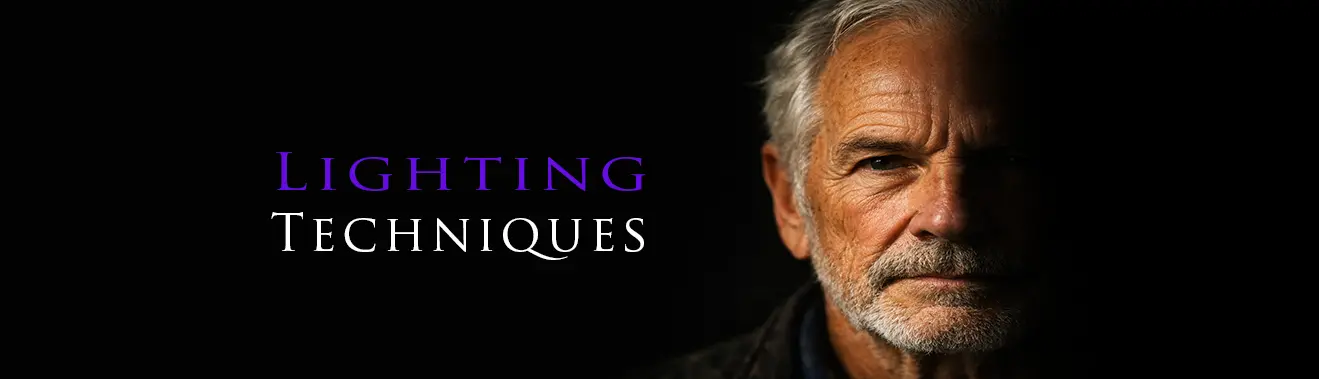
A classical technique using extreme contrast between light and shadow. Creates depth, mystery, and sculptural form. Common in dramatic cinema and expressive character studies.
Low-Key Lighting
Deep shadows, minimal fill, and a narrow lighting ratio. The backbone of noir, thrillers, and tension-driven scenes.
High-Key Lighting
Bright, even, low-contrast lighting with minimal shadows. Used in commercials, beauty, and optimistic storytelling.
Noir Lighting
A stylized form of low-key lighting with strong silhouettes, venetian blind shadows, and high contrast. Evokes mystery, moral ambiguity, and psychological tension.
Expressionist Lighting
Highly stylized, exaggerated lighting used to externalize emotion. Shapes, angles, and colors become symbolic rather than realistic.
Side Lighting / Lateral Key
Lighting from the side emphasizes contours and volume. Ideal for character studies, internal conflict, and sculptural definition.
Top-Down Lighting
Light from directly above. Creates deep eye shadows and a sense of weight, severity, or exposure.
Underlighting
Light from below the subject. Distorts features and breaks natural perception. Historically linked to horror and psychological unease.
Bounce Lighting
Indirect light reflected off a surface (wall, ceiling, board). Soft, natural, and flattering. Used for realism and gentle mood.
Motivated Lighting
Every light has a logical source: window, lamp, neon, screen. Blends realism with control, ensuring the scene feels believable.
Practical Lighting
Visible light sources inside the scene: lamps, candles, signs, screens. Adds realism, depth, and environmental logic.
Rim Light
A narrow edge of light outlining the subject. Creates separation, depth, and a three-dimensional silhouette.
Backlight Silhouette
When the backlight is strong and the key is removed, the subject becomes a silhouette. Used for symbolism, mystery, or dramatic emphasis.
Fill Light Reduction
Reducing or removing fill increases contrast and emotional tension. A subtle but powerful way to shift mood without changing the key.
Specular Highlight Lighting
Lighting designed to create bright, crisp reflections on surfaces. Used for metal, glass, skin sheen, and high-end commercial aesthetics.
Bi-Color Lighting
Using two contrasting color temperatures (warm vs cool). Shapes emotional contrast, depth, and visual tension.
How Filmmakers Choose the Right Lighting Technique
Lighting choices are intentional. Cinematographers think in terms of:
- What emotion the viewer should feel.
- How much of the subject should be revealed.
- Whether the scene should feel safe, tense, intimate, or overwhelming.
- Whether the light is motivated by the environment or purely stylistic.
Lighting is the language of mood. Once you understand how each technique shapes perception, you can guide the audience with precision.
Final Thoughts
Lighting techniques are more than technical setups. They’re narrative tools that define atmosphere, reveal character, and shape emotional tone. A slight shift in contrast, direction, or color can transform a flat image into something expressive and memorable.
Mastering lighting means mastering how your story is felt, not just how it is seen.
Explore Lighting in Your Cinematic Prompts
Use our cinematic prompt builder to experiment with professional lighting techniques in your AI image generation.
Try the ToolContinue Reading
- Shot Types — The building blocks of visual storytelling
- Vikings Cinematic Prompts — Inspired by the TV series