
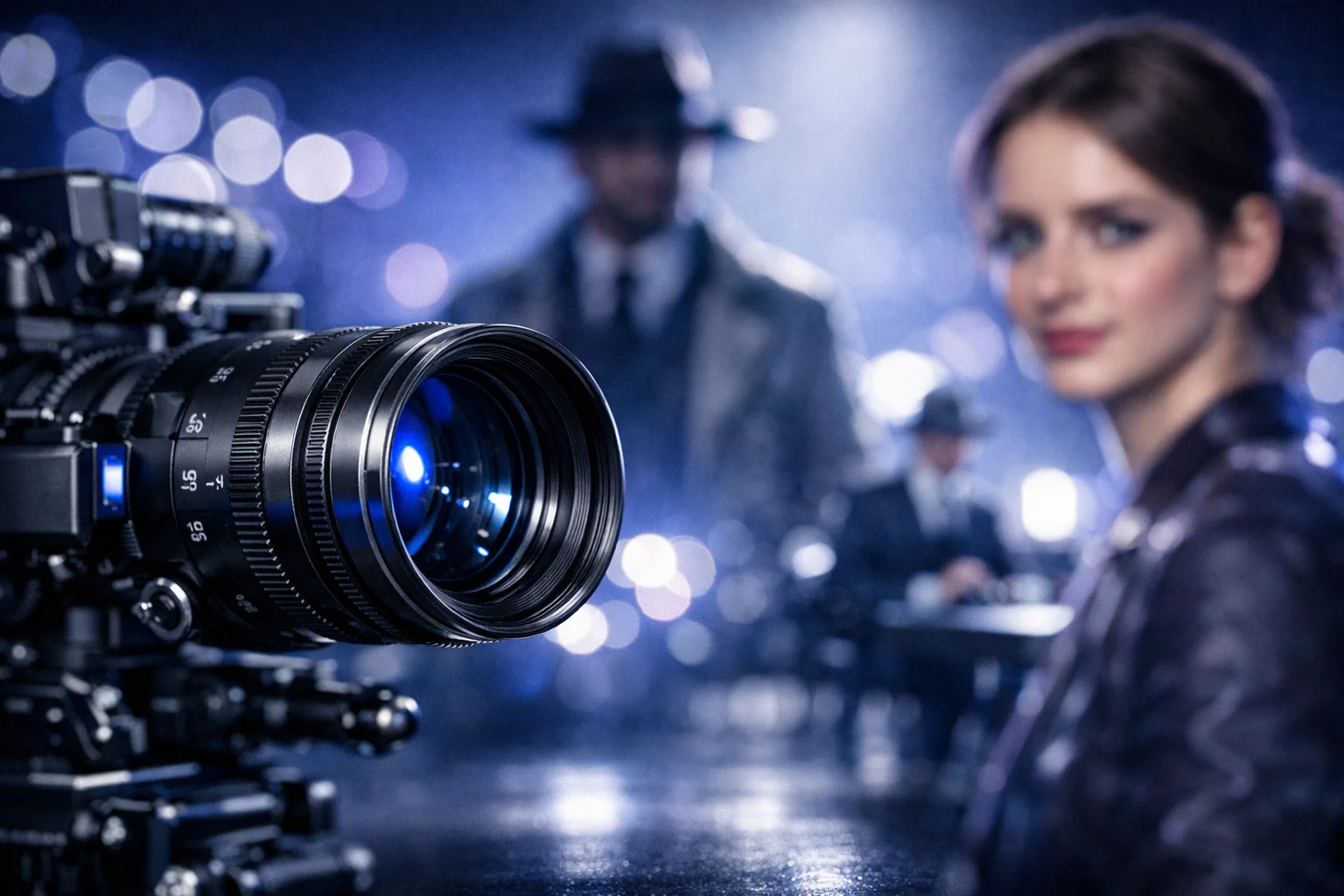
Depth of field is one of the most expressive tools in visual storytelling. It determines what the viewer pays attention to, how the eye moves through the frame, and how much of the world feels present or distant. While many creators reduce DOF to "shallow vs deep," the reality is far richer. Cinematographers use a full spectrum of focus techniques to shape emotion, rhythm, and meaning.
This article explores every major form of depth of field, from the fundamentals to the more advanced methods used in narrative filmmaking.
What Depth of Field Really Represents
Depth of field is the distance range within an image that appears acceptably sharp. It is controlled by three variables: aperture, focal length, and camera-to-subject distance. Change any of these, and the viewer's perception shifts.
But depth of field is not just a technical measurement. It's a storytelling decision.
1. Shallow Depth of Field
A shallow depth of field isolates the subject by blurring the background and foreground. It creates intimacy, vulnerability, and emotional focus.
Shallow DOF is used when: the character's inner world matters more than the environment, the scene needs softness or introspection, or the background is distracting or irrelevant. It's the language of portraits, close-ups, and character-driven moments.
2. Extreme Shallow Depth of Field
An intensified version of shallow DOF where only a razor-thin slice of the subject is sharp. Often achieved with ultra-fast lenses (f/0.95, f/1.2), it creates a dreamlike, subjective, or fragile atmosphere.
3. Shallow Focus
A variant of shallow DOF where the subject plane is sharp but the blur is less extreme than in "extreme shallow DOF." Used for emotional emphasis without losing too much context.
4. Medium Depth of Field
A balanced DOF where the subject remains clearly defined while the environment stays readable. Common in dialogue scenes and naturalistic cinematography.
5. Deep Depth of Field
Deep depth of field keeps most of the scene sharp, from near to far. It's essential when the environment carries narrative weight.
Deep DOF is used when: multiple characters share the frame, blocking and spatial relationships matter, or the viewer needs to explore the scene freely. It's the backbone of landscapes, ensemble scenes, and wide shots.
6. Deep Focus
A specific form of deep DOF where every plane — foreground, midground, background — remains sharp simultaneously. Popularized by Gregg Toland in Citizen Kane, it supports layered storytelling and complex staging.
7. Wide-Angle Extended DOF
Wide lenses naturally increase depth of field. Combined with narrow apertures, they produce extended DOF where even close foreground elements remain sharp. Ideal for dynamic movement and immersive environments.
8. Compressed Depth of Field
Created with long focal lengths, compressed DOF flattens perspective and makes background elements appear closer to the subject. It intensifies subject isolation and creates a more intimate or pressurized visual feel.
9. Selective Focus
Selective focus is the deliberate choice to keep one plane sharp while letting others fall away. It's not about shallow or deep DOF — it's about hierarchy. Selective focus guides the viewer's eye toward a detail, a gesture, a reaction, or a clue. It's one of the cleanest ways to control narrative emphasis without cutting.
10. Hyperfocal Distance
Hyperfocal distance is the technique that maximizes depth of field. By focusing at a specific distance, everything from half that distance to infinity becomes acceptably sharp. It's essential for documentary work, street photography, run-and-gun filmmaking, and wide environmental shots. Hyperfocal focusing ensures clarity without constant refocusing.
11. Zone Focusing
Zone focusing is a practical method where the cinematographer pre-sets a focus range and waits for the action to enter it. It's fast, reliable, and ideal for unpredictable movement. Used heavily in handheld documentary, action scenes, and fast street sequences. Zone focusing prioritizes timing and instinct over precision mechanics.
How Cinematographers Choose the Right DOF Technique
Depth of field is always tied to intention. The question is never "What aperture should I use?" but rather: How close should the viewer feel to the subject? How much of the world should be visible? Should the scene feel controlled or chaotic? Is the moment about clarity or ambiguity? Does the story benefit from isolation or connection?
Shallow DOF creates intimacy. Deep DOF creates context. Selective focus creates hierarchy. Hyperfocal and zone focusing create freedom and immediacy. Compressed DOF shapes perspective. Wide-angle extended DOF enhances immersion. Each technique shapes the viewer's emotional experience.
Final Thoughts
Depth of field is far more than a technical setting. It's a narrative tool that determines how the viewer enters the scene, what they notice first, and how they interpret the moment. Whether you isolate a character with shallow focus or reveal an entire world with deep focus, DOF is one of the most direct ways to shape meaning. Mastering every form of depth of field gives you control over attention, emotion, and visual rhythm — the core of cinematic storytelling.
Try the Cinematic Prompt Builder
Build professional cinematic prompts with camera, lighting, and composition controls — built for the way AI understands language.
Try the ToolContinue Reading
- Shot Types — The building blocks of visual storytelling
- Camera Angles — How perspective shapes the story