

Table of Contents
- 1. Introduction - Why Stranger Things Became a Visual Icon
- 2. The Visual Identity of Stranger Things - Nostalgia Meets the Supernatural
- 3. The 1980s Look - Color, Texture, Fashion and Set Design
- 4. Lighting and Mood - Flashlights, Neon, Fog and Darkness
- 5. The Upside Down - Organic Horror, Spores, Darkness and Distortion
- 6. Props and Iconography - Walkie Talkies, Bikes, Christmas Lights and Analog Tech
- 7. Vocabulary of Stranger Things - Words That Define the Aesthetic
- 8. Atmosphere and Tension - How to Build Cinematic Suspense in Prompts
- 9. Ready to Use Prompt Structures - Modular Templates
- 10. Full Cinematic Prompt Examples
- 11. Conclusion - Bringing the Aesthetic Together
Introduction - Why Stranger Things Became a Visual Icon
Stranger Things became one of the most influential series of the last decade, blending 1980s nostalgia with supernatural horror and cinematic storytelling. Created by the Duffer Brothers and released on Netflix in 2016, the show quickly evolved from a sleeper hit into a global cultural phenomenon. Its mix of suburban Americana, analog technology, neon lit tension and Spielberg inspired framing created a visual identity that audiences recognize instantly.
This aesthetic clarity is exactly why Stranger Things works so well in AI. The series is built on strong shapes, atmospheric lighting, iconic props and a world that feels both familiar and uncanny. When translated into prompts, these elements give creators a powerful foundation for generating images that capture the show's tone without copying specific characters or scenes.
In this guide, we break down the visual language of Stranger Things and show how to recreate its mood, lighting, textures and supernatural atmosphere through precise, cinematic AI prompts.
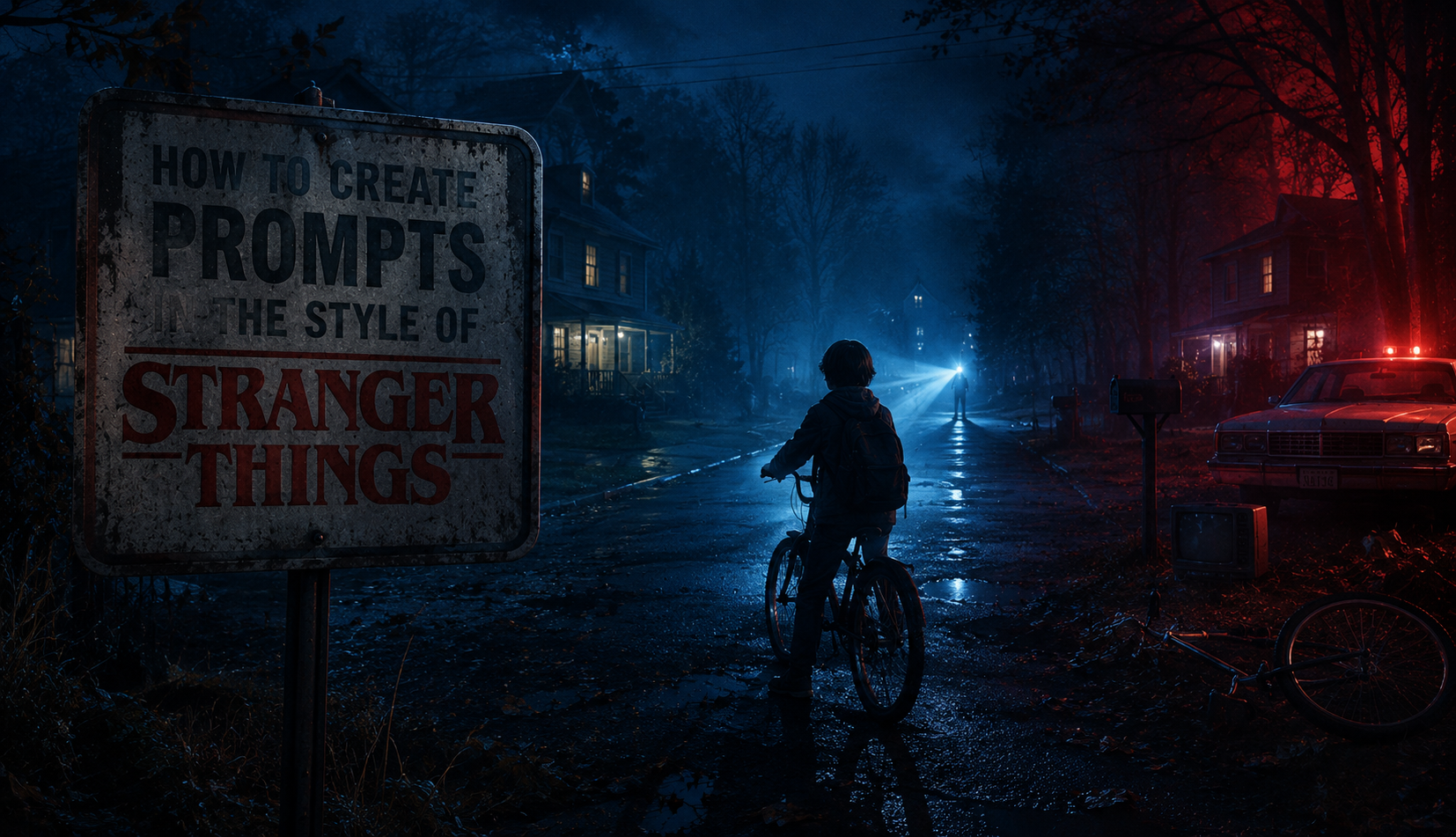
The Visual Identity of Stranger Things - Nostalgia Meets the Supernatural
Stranger Things built a visual identity that became instantly recognizable. The series created by the Duffer Brothers blends three core elements that define its style: 1980s nostalgia, small town Americana and a supernatural presence that leans into atmospheric horror. This combination works because each layer is treated with cinematic intention, from production design to lighting and camera choices.
The foundation of the show's aesthetic comes from its portrayal of Hawkins, a fictional Indiana town that feels lifted from classic films of the 1980s. Wooden houses, quiet streets, bicycles, shopping malls and public schools create a world that feels familiar to anyone who grew up with that era of cinema. The series does not simply imitate the decade. It recreates the emotional texture of living in it. The creators have cited influences such as Steven Spielberg, John Carpenter and Stephen King, and those references are visible in the balance between wonder, suspense and character driven storytelling.
The second pillar is the supernatural element. The presence of the Upside Down introduces a sharp contrast to the warm suburban environment. The show moves between everyday life and a dark, organic and hostile parallel world. This visual opposition strengthens the emotional impact of the story and gives the series a distinct identity. The supernatural is always integrated with restraint. It never overwhelms the 1980s aesthetic. It contaminates it, which makes the tension more effective.
The third element is the show's cinematic tone. Stranger Things uses wide frames, slow push ins, controlled lighting and color palettes that shift with the mood. Warm tones dominate scenes of normal life, while colder and desaturated colors appear in moments of fear or uncertainty. This visual rhythm creates a signature that remains consistent across seasons.
The identity of Stranger Things works because it is clear, cohesive and emotionally charged. It is a world where nostalgia and mystery coexist, where the familiar is constantly threatened by the unknown. This clarity is what makes the series so effective when translated into AI prompts. It offers solid visual references that can be described with precision without relying on specific characters or copyrighted elements.
The 1980s Look - Color, Texture, Fashion and Set Design
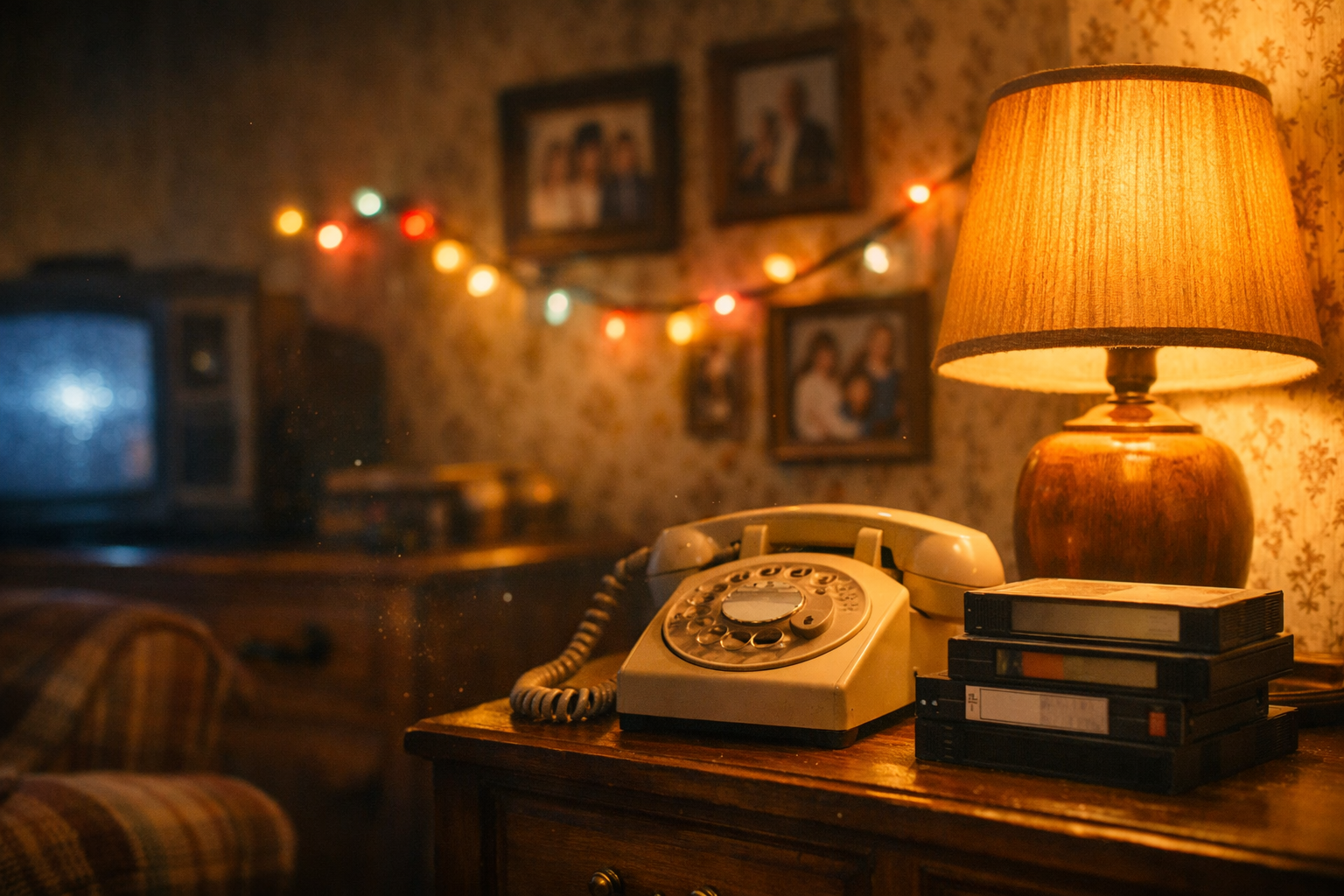
The visual world of Stranger Things is built on a faithful and carefully researched recreation of the 1980s. The series does not rely on clich�s or exaggerated nostalgia. Instead, it uses authentic details to create a world that feels lived in. This attention to realism is one of the reasons the show resonates so strongly with viewers and works so well as a reference for AI prompts.
The color palette is warm and slightly muted. Many interiors use wood paneling, patterned wallpaper and soft incandescent lighting. These choices reflect the design trends of American homes during that decade. The production team studied real houses, schools and public buildings from the period to ensure accuracy. The result is an environment that feels familiar even to those who did not grow up in that era.
Fashion plays an important role in defining the tone. Characters wear denim jackets, striped T shirts, corduroy pants, windbreakers and other pieces that were common in the early and mid 1980s. The wardrobe is not used as decoration. It helps establish personality and social context. The show avoids turning the clothing into caricature and instead treats it as part of everyday life.
Technology is another key element. The presence of walkie talkies, cassette players, CRT televisions and early home computers reinforces the sense of time. These objects are not placed randomly. They are integrated into the story and often drive the plot. Their design and texture add a tactile quality that modern devices do not have, which makes them especially effective in visual prompts.
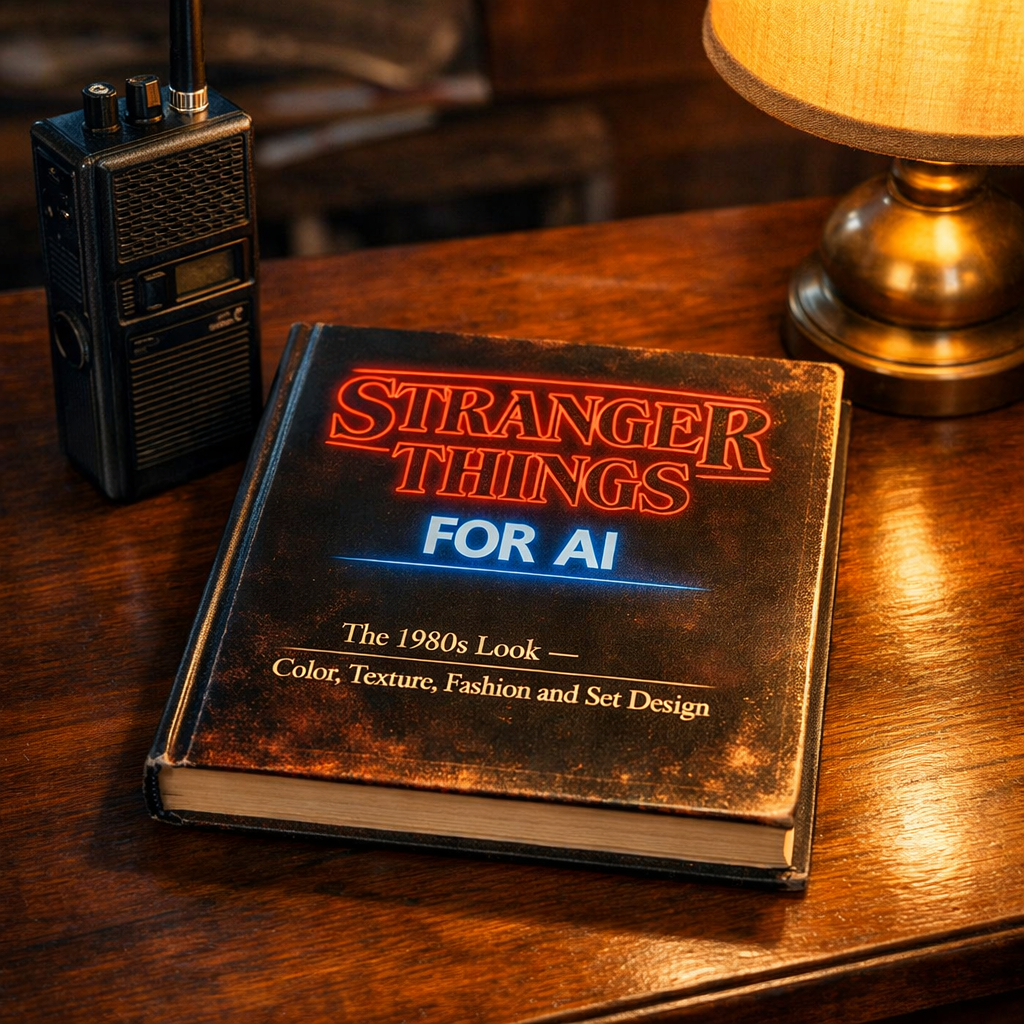
Public spaces follow the same logic. The Hawkins Middle School hallways, the local arcade, the Starcourt Mall and the police station all reflect the architecture and design of the period. The production design team used real references from the decade, including photographs and archived materials, to recreate these environments with precision.
The 1980s look in Stranger Things is not just a backdrop. It is a narrative tool. It creates a sense of innocence and normality that contrasts with the supernatural events unfolding in Hawkins. This contrast is essential for anyone who wants to create prompts inspired by the series. The more accurately the era is captured, the stronger the emotional impact of the scene.
Lighting and Mood - Flashlights, Neon, Fog and Darkness
Lighting is one of the strongest storytelling tools in Stranger Things. The series uses light not only to illuminate scenes but to shape emotion, guide attention and create tension. The show's lighting style is deliberate and controlled, and it plays a major role in defining the atmosphere that made the series so distinctive.
One of the most recognizable elements is the use of flashlights. Characters often move through dark basements, forests or school hallways with a single beam of light cutting through the shadows. This technique creates a sense of vulnerability. The viewer sees only what the characters see, which increases the tension and makes the environment feel unpredictable.
Neon lighting is another signature. The series uses red and blue neon tones in arcades, malls and night scenes. These colors were common in the 1980s, but in Stranger Things they also serve a narrative purpose. Red often signals danger or emotional intensity, while blue is used in moments of mystery or uncertainty. The contrast between these colors helps define the emotional rhythm of a scene.
Fog and atmospheric haze are used to soften the image and create depth. Many exterior night scenes include a thin layer of mist that catches the light and adds texture. This technique gives the environment a dreamlike quality and makes the supernatural elements feel more integrated with the real world. It also helps separate foreground and background, which is useful when building tension.
Darkness is treated with intention. The show rarely uses complete black. Instead, it uses controlled shadows that reveal just enough to keep the viewer engaged. This approach allows the series to maintain clarity while still creating a sense of threat. The darkness feels alive, as if something could emerge from it at any moment.
The lighting style of Stranger Things works because it supports the story. It creates contrast between safety and danger, between the familiar and the unknown. For anyone creating AI prompts inspired by the series, understanding this balance is essential. The right lighting choices can transform a simple scene into something cinematic and emotionally charged.
The Upside Down - Organic Horror, Spores, Darkness and Distortion
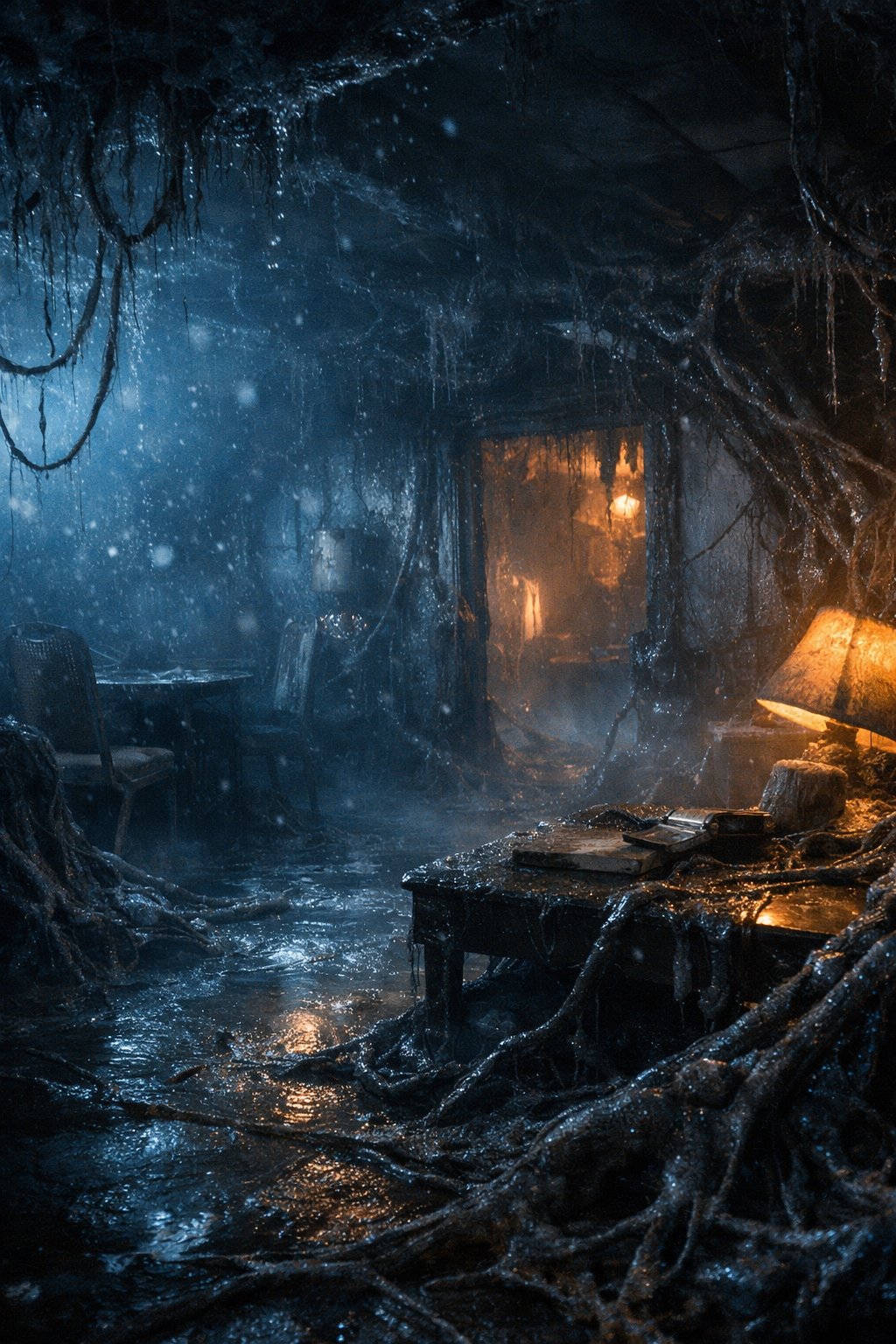
The Upside Down is the most distinctive visual element in Stranger Things. It is not presented as a traditional fantasy world. It feels biological, decayed and strangely familiar, as if Hawkins had been mirrored and corrupted. This duality is what gives the Upside Down its power. It looks like the real world, but every detail is wrong in a way that is unsettling rather than exaggerated.
The environment is defined by organic textures. Vines and root like structures cover walls, ceilings and floors. They appear to grow over objects rather than replace them, which reinforces the idea that the Upside Down is a parasitic version of reality. These textures are always damp, irregular and slightly reflective, giving the world a tactile and almost suffocating quality.
Suspended particles are another signature. The air is filled with drifting spores that move slowly and catch the light. They create a sense of contamination and make the atmosphere feel heavy. This detail is subtle but essential. It gives the Upside Down a constant sense of motion, even when nothing is happening in the scene.
Lighting in the Upside Down is soft and diffused. The world is dark, but not in a way that hides everything. Instead, the light seems to leak through the environment, as if filtered by layers of fog and organic matter. This creates silhouettes and shapes that are visible but not fully defined. The result is a space that feels dangerous without relying on jump scares or extreme contrast.
Color plays a major role. The Upside Down uses a cold palette dominated by blues, greys and desaturated tones. Warm colors appear only when something from the real world intrudes, which makes those moments stand out. This contrast helps the viewer understand immediately when a scene takes place in the parallel world.
The Upside Down works because it is consistent. Every element supports the idea of a corrupted reflection of Hawkins. It is familiar enough to be recognizable but altered enough to feel threatening. For anyone creating AI prompts inspired by the series, capturing this balance is essential. The Upside Down is not chaos. It is order twisted into something organic, silent and hostile.
Props and Iconography - Walkie Talkies, Bikes, Christmas Lights and Analog Tech
Props are a fundamental part of the visual identity of Stranger Things. They help define the world, the tone and the emotional rhythm of the story. The objects chosen by the production team are consistent with the 1980s setting and carry narrative weight. When used in prompts, these props immediately evoke the atmosphere of Hawkins without referencing specific characters.
Walkie talkies are one of the most recognizable items in the series. They represent communication, teamwork and the sense of adventure that drives the younger characters. Their bulky design and textured plastic make them visually distinctive. Including walkie talkies in a prompt instantly signals a world built on analog technology.
Bikes are another essential symbol. They reflect freedom, movement and the everyday life of a small American town. The kids often travel through forests, quiet streets and suburban neighborhoods on their bikes, which creates a sense of exploration. The retro frames and colors reinforce the 1980s aesthetic. Bikes are one of the quickest ways to anchor a scene in the visual language of the show.
Christmas lights became iconic in the first season. Their warm glow contrasts with the darker supernatural elements and creates a memorable emotional image. They are simple, familiar and visually striking. When used in prompts, Christmas lights add both warmth and mystery.
Analog technology defines the decade and the tone of the series. Cassette players, CRT televisions, arcade machines, rotary phones and early home computers all contribute to the authenticity of the setting. These objects have weight, texture and imperfections that make them visually appealing. Analog tech helps establish the contrast between everyday life and the strange events unfolding in Hawkins.
Other props such as flashlights, maps, radios and school supplies help build the daily environment of the characters. Each object is chosen with intention. Nothing feels random or overly stylized. This grounded approach is what makes the supernatural elements feel more impactful.
Props in Stranger Things work because they are meaningful. They support the story, define the characters and reinforce the visual identity of the series. When creating AI prompts inspired by the show, choosing the right objects can instantly set the tone and make the scene feel authentic without relying on copyrighted elements.
Vocabulary of Stranger Things - Words That Define the Aesthetic
The world of Stranger Things is built on a set of recurring visual and atmospheric cues. These cues form a vocabulary that helps describe the show with clarity and precision. Understanding this vocabulary is essential when creating prompts inspired by the series, because it allows you to communicate tone and mood without referencing specific characters or copyrighted elements.
The suburban environment is the foundation of the show's visual identity. Terms such as quiet streets, wooden houses, basements, attics and school hallways capture the everyday world of Hawkins. These locations feel familiar and grounded, which makes them a strong starting point for any scene.
Atmospheric vocabulary defines the emotional temperature of the series. Words like dim light, soft haze, cold air, fog, shadows and neon reflections help build tension and guide the viewer's attention.
The supernatural vocabulary is equally important. Expressions such as organic vines, drifting spores, distorted shapes, echoing silence and corrupted surfaces describe the Upside Down in a way that is evocative but not specific to any plot point.
Technology from the 1980s adds texture and authenticity. Terms like analog devices, CRT screens, cassette players, arcade machines and radio static help anchor the scene in the correct decade.
Lighting vocabulary is essential for capturing the show's cinematic tone. Words such as flashlight beam, neon glow, warm interior light, cold exterior light and backlit silhouettes describe how the scene should feel rather than what it contains.
Emotional vocabulary helps define the mood. Terms like unease, anticipation, quiet fear, childlike curiosity and hidden threat reflect the emotional core of the series.
This vocabulary works because it is precise and consistent with the world of Stranger Things. When used together, these terms create a clear and cinematic foundation for AI generated imagery without relying on copyrighted elements.
Atmosphere and Tension - How to Build Cinematic Suspense in Prompts
Atmosphere is one of the strongest elements in Stranger Things. The series creates tension not through constant action but through careful control of mood, pacing and visual cues. Understanding how this atmosphere is built helps you create prompts that feel cinematic and emotionally charged without relying on specific characters or copyrighted details.
Suspense often begins with the environment. Scenes set in quiet suburban streets, empty school hallways or dense forests create a sense of isolation. These locations feel safe at first glance, but the silence and stillness suggest that something is about to happen. This contrast is essential for building tension.
Lighting plays a major role in shaping mood. A flashlight beam cutting through darkness, a neon glow reflecting on wet pavement or a soft haze drifting through a room can transform an ordinary setting into something unsettling. These lighting choices guide the viewer's attention and create anticipation.
Sound is not directly visible in prompts, but you can evoke it through descriptive cues. Words like echoing silence, distant rumble or radio static help the viewer imagine what the characters might be hearing. These subtle hints add depth and tension to the scene.
Movement is another tool for creating suspense. A scene where the camera slowly pushes forward, or where a character stands still while something shifts in the background, creates a sense of unease. Describing shifting shadows or distorted shapes can suggest that something is present without revealing it.
The Upside Down adds a different kind of tension. Its drifting spores, organic vines and corrupted surfaces create an environment that feels hostile even when nothing is moving. The atmosphere itself becomes a threat. Using these elements in prompts helps create scenes that feel dangerous and otherworldly.
Emotional tension is just as important as visual tension. Words like unease, anticipation, quiet fear and hidden threat help define how the scene should feel. These terms guide the tone and help the viewer understand the emotional stakes.
Atmosphere in Stranger Things works because it is controlled and intentional. Every detail supports the feeling that something is not quite right. When creating AI prompts inspired by the series, focusing on these elements allows you to build tension in a way that feels authentic, cinematic and true to the world of Hawkins.
Ready to Use Prompt Structures - Modular Templates
Creating prompts inspired by Stranger Things works best when you combine atmosphere, setting, lighting and emotional tone in a clear structure. The goal is not to imitate the series but to use its visual language as a foundation. Modular templates help you build scenes that feel cinematic and consistent without relying on specific characters or copyrighted details.
A strong prompt usually begins with the environment. Start by defining a suburban location such as a quiet street, a basement, a forest edge or a school hallway. These settings create a grounded base that reflects the tone of the 1980s small town world.
Next, add lighting. The show's atmosphere depends heavily on flashlight beams, neon glow, soft haze and cold exterior light. Lighting defines mood more than any other element, so it should appear early in the prompt.
Then introduce atmospheric cues. Terms like fog, shadows, drifting spores or organic vines help shape tension and hint at something hidden.
Props add authenticity. Including analog tech, walkie talkies, bikes or Christmas lights reinforces the 1980s setting and gives the scene a tactile quality.
Finally, define the emotional tone. Words like unease, anticipation, quiet fear or hidden threat guide the mood and help the viewer understand the tension of the moment.
Below are modular templates that follow this structure. They can be adapted to any scene by replacing or expanding each component.
Template 1:
Suburban Night Scene A quiet suburban street at night, illuminated by a single flashlight beam, soft haze drifting through the air, long shadows stretching across the pavement, analog devices scattered on the ground, atmosphere filled with quiet fear and anticipation.
Template 2:
School Hallway Investigation An empty school hallway with flickering fluorescent lights, cold air and low visibility, lockers lining the walls, a walkie talkie emitting faint radio static, tension rising as shadows shift in the distance.
Template 3:
Forest Edge Discovery A dense forest edge at dusk, warm interior light fading behind the trees, fog rolling across the ground, organic vines wrapped around fallen branches, a bike abandoned nearby, mood filled with unease and hidden threat.
Template 4:
Basement Mystery A dimly lit basement with wooden walls, a single lamp casting a soft glow, drifting dust in the air, old analog equipment humming quietly, atmosphere heavy with anticipation and quiet fear.
Template 5:
Upside Down Inspired Scene A corrupted version of a familiar room, cold diffused light filtering through drifting spores, surfaces covered in organic vines and distorted shapes, silence echoing through the space, emotional tone defined by tension and uncertainty.
These templates work because they follow the visual grammar of the series without copying it. They combine environment, lighting, atmosphere, props and emotion in a way that feels cohesive and cinematic.
Full Cinematic Prompt Examples
The best way to apply the visual language of Stranger Things is through complete prompts that combine environment, lighting, atmosphere, props and emotional tone. These examples follow the vocabulary and structures developed in the previous chapters. Each one is designed to be modular, meaning you can expand, reduce or adapt it to different scenes while keeping the same cinematic identity.
These prompts avoid copyrighted elements and focus only on the aesthetic foundations of the show.
Example 1: Suburban Night Suspense
A quiet suburban street at night with wooden houses and tall trees, illuminated by a narrow flashlight beam, soft haze drifting across the pavement, long shadows stretching toward the viewer, an old bike lying on its side, atmosphere filled with quiet fear and hidden threat.
Example 2: Basement Discovery
A dimly lit basement with wooden walls and scattered tools, a single lamp casting warm interior light, dust floating in the air, old analog devices humming softly, a map pinned to the wall, atmosphere heavy with anticipation and unease.
Example 3: Forest Edge at Dusk
A dense forest edge at dusk, faint cold exterior light filtering through the trees, rolling fog covering the ground, organic vines wrapped around fallen branches, a retro walkie talkie emitting faint static, mood defined by unease and growing tension.
Example 4: School Hallway Tension
An empty school hallway with rows of lockers, flickering lights creating intermittent neon reflections on the floor, distant echoing silence filling the space, a notebook dropped on the ground, subtle shifting shadows at the far end of the corridor, emotional tone marked by anticipation.
Example 5: Living Room with Christmas Lights
A cozy living room with wooden furniture and patterned wallpaper, illuminated by warm Christmas lights hanging across the wall, soft haze catching the glow, a rotary phone resting on a table, atmosphere mixing warmth with subtle unease.
Example 6: Upside Down Inspired Scene
A corrupted version of a familiar room, filled with drifting spores, surfaces covered in organic vines and distorted shapes, cold diffused light filtering through the fog, silence so deep it feels physical, emotional tone defined by hidden threat and uncertainty.
Example 7: Arcade Night Scene
A retro arcade glowing with neon light, CRT screens flickering with static, rows of machines reflecting bright colors on the floor, a forgotten cassette player on a bench, atmosphere filled with nostalgia and a subtle sense of anticipation.
Example 8: Roadside Encounter
A rural roadside at night, illuminated by a single streetlamp, fog rolling across the asphalt, a bike leaning against a sign, distant trees forming dark silhouettes, emotional tone marked by quiet fear.
Example 9: Abandoned Warehouse
An abandoned warehouse with broken windows, cold exterior light seeping through the cracks, dust swirling in the air, old analog equipment scattered across tables, atmosphere thick with unease and tension.
Example 10: Forest Clearing with Strange Light
A forest clearing illuminated by an unnatural neon glow, branches covered in corrupted surfaces, drifting spores catching the light, silence broken only by faint radio static, emotional tone filled with hidden threat.
Conclusion - Bringing the Aesthetic Together
Creating prompts inspired by Stranger Things is not about copying scenes or characters. It is about understanding the visual language that defines the series and translating it into clear, cinematic descriptions. Throughout this guide, we explored the elements that shape that identity, from suburban environments to lighting vocabulary, from analog technology to the unsettling presence of the Upside Down.
The strength of the show comes from its consistency. Every scene balances nostalgia with tension, warmth with mystery, the ordinary with the supernatural. When building prompts, the same balance applies. A strong prompt uses environment, atmosphere, props and emotion in a way that feels grounded and intentional. It avoids excess detail and focuses instead on mood, texture and visual clarity.
The vocabulary developed in this guide helps maintain that consistency. Words like unease, anticipation, fog, flashlight beam and organic vines carry the emotional and visual weight of the series without referencing copyrighted elements. They allow you to build scenes that feel authentic while staying fully original.
The modular templates and full prompt examples show how these components work together. They demonstrate how a simple suburban street, a dim basement or a forest clearing can become cinematic when described with intention. They also show how atmosphere and tension can be shaped through light, texture and emotional tone.
In the end, the goal is not to recreate Stranger Things. It is to capture the feeling of stepping into a world where the familiar is touched by the unknown. A world where quiet streets hide secrets, where analog devices crackle with static and where the air itself seems to hold its breath. When you understand the visual grammar behind that world, you can create prompts that feel rich, immersive and unmistakably atmospheric.
This guide gives you the tools to do exactly that. Use them to build scenes that resonate, scenes that feel alive, scenes that carry the same cinematic energy that made the series iconic.
Try the Cinematic Prompt Builder
Create your own cinematic prompts with our free builder.
Try the Tool